

Nelson Mandela (Mvezo 1918 – Johannesburg 2013)
Nelson Mandela fu attivista e leader (prima morale poi politico) del movimento anti-apartheid in Sudafrica in un periodo storico in cui la segregazione razziale legalizzava la classificazione (e separazione) delle persone in cittadini di serie A e cittadini di serie B in base al solo colore della pelle. Istituito nel 1948 e rimasto in vigore fino al 1991, all’interno del libro l’apartheid viene descritto come segue:
Apartheid was a new term but an old idea. It literally means 'apartness,' and it represented the codification in one oppressive system of all the laws and regulations that had kept Africans in an inferior position to whites for centuries. (...) The premise of apartheid was that whites were superior to Africans, Coloureds and Indians, and the function of it was to entrench white supremacy for ever. (pp. 127-128)
Tradotto significa: “Apartheid era un termine nuovo che rappresentava una vecchia idea. Letteralmente significa ‘separatezza,’ e rappresentava la codificazione in un sistema oppressore di tutte le leggi e normative che per secoli avevano tenuto gli africani in una posizione inferiore rispetto a quella dei bianchi. (…) Il principio o presupposto dell’apartheid era che i bianchi erano superiori agli africani, alle persone di colore e agli indiani, e la funzione di esso era di consolidare la supremazia bianca per sempre.”
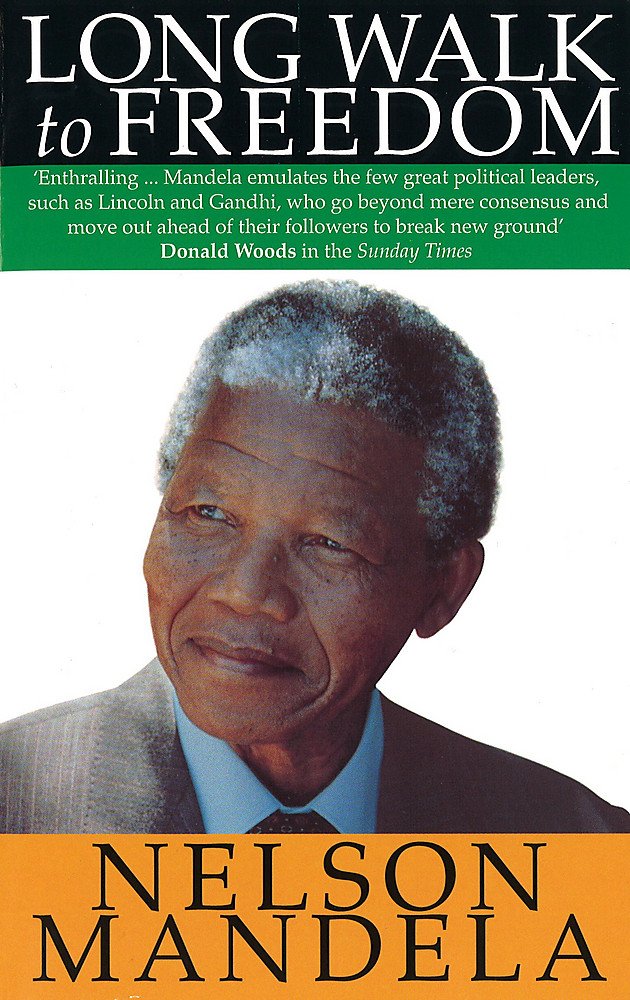
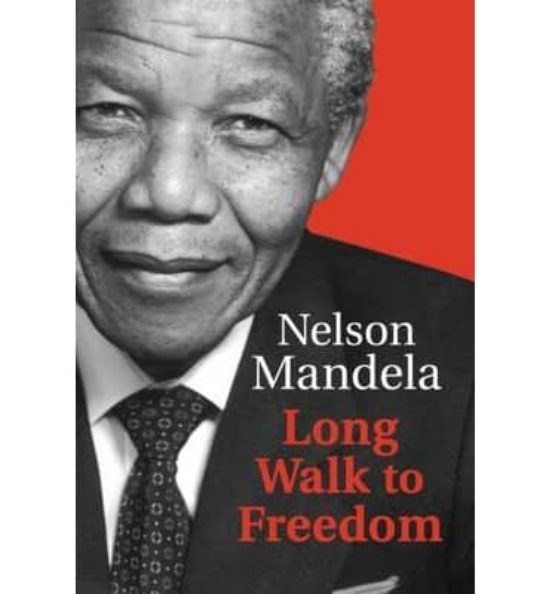
Questo libro racconta in maniera brillante il dramma delle esperienze che hanno plasmato il destino di Nelson Mandela. Long Walk to Freedom è una storia di avversità, resilienza, e trionfo finale narrato con la chiarezza e l’eloquenza di un leader nato.
Premio Nobel per la pace nel 1993, muore nel 2013 a Johannesburg.
DIFFICOLTA’: medio/bassa (a volte ci possono essere concetti o accenni storici che richiedono qualche conoscenza in più per poter capire a pieno la situazione descritta; tuttavia, questo non influisce in nessun modo sulla lettura/comprensione)
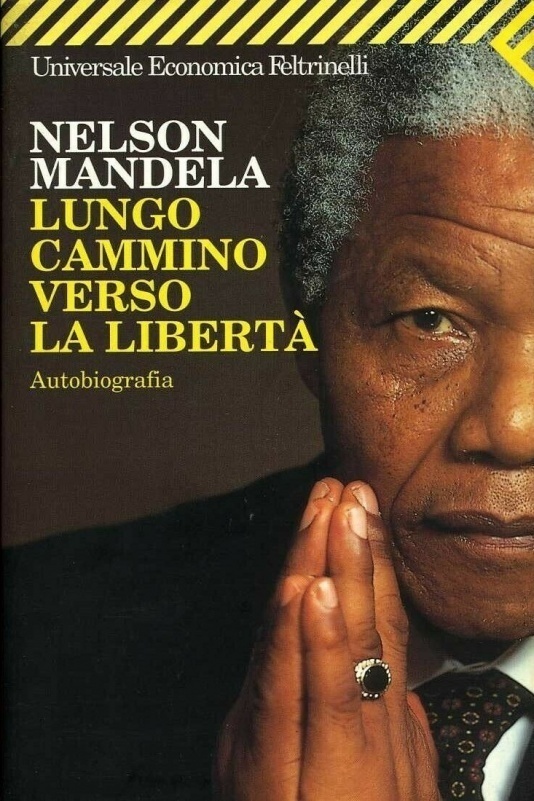
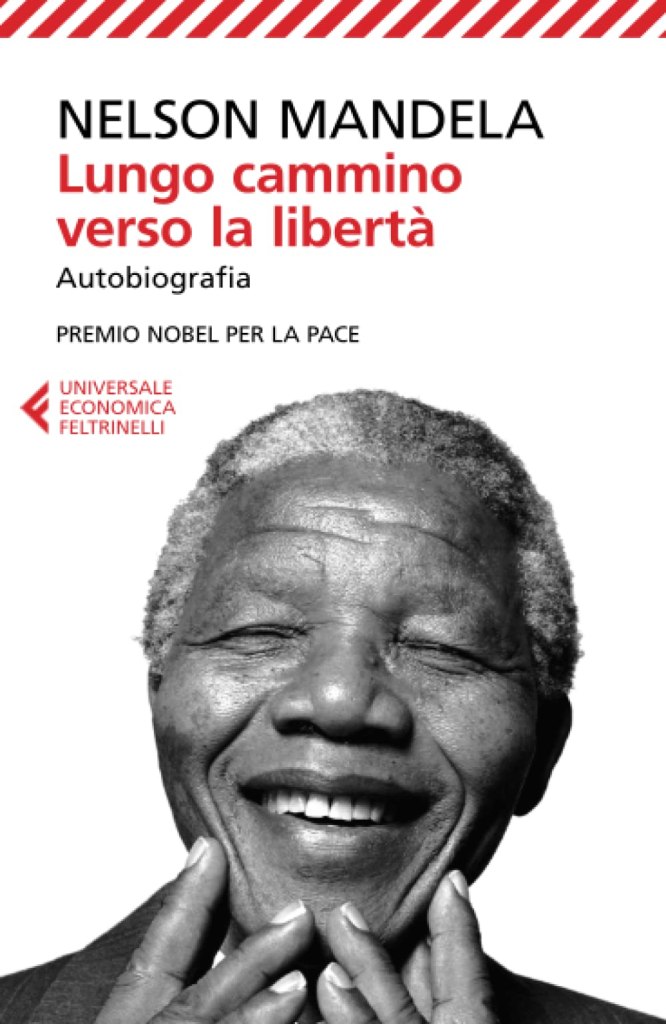
LINGUA ORIGINALE: Inglese (disponibile in italiano “Lungo cammino verso la libertà”)
I learned that to humiliate another person is to make him suffer an unnecessarily cruel fate.
Ho imparato che umiliare un’altra persona significa farle soffrire un fato inutilmente crudele. (pp. 11-12)
The education I received was a British education, in which British ideas, British culture and British institutions were automatically assumed to be superior. There was no such thing as African culture.
L’educazione che ho ricevuto era un’educazione britannica, nella quale le idee britanniche, la cultura britannica e le istituzioni britanniche erano automaticamente ritenute essere superiori. Non esisteva una cultura africana. (p. 16)
I have always endeavoured to listen to what each and every person in a discussion had to say before venturing my own opinion.
Mi sono sempre sforzato di ascoltare ciò che ogni persona aveva da dire all’interno di una discussione prima di azzardare un’opinione personale. (p. 25)
… a leader, he said, is like a shepherd. He stays behind the flock, letting the most nimble go on ahead, whereupon the others follow, not realizing that all along they are being directed from behind.
… un leader, disse, è come un pastore. sta dietro al gregge, lasciando andare avanti i più vivaci e intelligenti, dopodichè gli altri seguono, non rendendosi conto che per tutto il tempo sono stati guidati da dietro. (pp. 25-26)
This was an all too typical South African story. It was not the lack of ability that limited my people, but lack of opportunity.
Questa era la tipica storia sudafricana. Non era la mancanza di abilità che limitava il mio popolo, ma la mancanza di opportunità. (p. 42)
I had become so used to my deceptions that I lied even when I did not have to.
Mi ero abituato così tanto ai miei inganni che mentivo persino quando non ce n’era bisogno.(p. 81)
Only mass education, he used to say, would free my people, arguing that an educated man could not be oppressed because he could think for himself.
Era solito dire che solamente l’istruzione avrebbe salvato il mio popolo, sostenendo che un uomo istruito non potrebbe essere oppresso perché sarebbe stato capace di pensare per sé stesso. (p. 82)
… I learned from Gaur that a degree was not in itself a guarantee of leadership and that it meant nothing unless one went out into the community to prove oneself.
Ho imparato da Gaur che un titolo di studio non era da solo garanzia di leadership e che non significava niente a meno che una persona non uscisse e andasse nella sua comunità per mettersi alla prova o affermarsi. (p. 85)
There is nothing like returning to a place that remains unchanged to find the ways in which you yourself have altered.
non c’è niente come ritornare in un posto che rimane inalterato per scoprire come tu stesso sei cambiato. (p. 97)
There was no particular day on which I said, Henceforth I will devote myself to the liberation of my people; instead, I simply found myself doing so, and could not do otherwise.
Non c’è stato un giorno in particolare in cui mi sono detto ‘Da adesso in poi dedicherò me stesso alla liberazione del mio popolo;’ piuttosto, mi sono semplicemente ritrovato a farlo, e non avrei potuto fare altrimenti. (p. 110)
Banning not only confines one physically, it imprisons one’s spirit. It induces a kind of psychological claustrophobia (…). The insidious effect of bans was that at a certain point one began to think that the oppressor was not without but within.
L’esclusione non solo confina una persona fisicamente, ma ne imprigiona lo spirito. provoca una sorta di claustrofobia psicologica (…). l’effetto subdolo della messa al bando faceva sì che ad un certo punto una persona pensasse che l’oppressore non fosse tanto all’esterno quanto all’interno. (p. 166)
Although we were dealing with officials whose competence was no greater than our own, their authority was founded on and protected by the colour of their skin.
Sebbene avessimo a che fare con funzionari la cui competenza non era superiore alla nostra, la loro autorità era fondata su e protetta dal colore della loro pelle. (p. 173)
Education is the great engine of personal development.
L’istruzione è il grande motore della crescita personale. (p. 194)
It is what we make out of what we have, not what we are given, that separates one person from another.
E’ ciò che facciamo di quello che abbiamo, non quello che ci viene dato, che separa una persona dall’altra. (p. 194)
I became a creature of the night. I would keep to my hideout during the day, and emerge to do my work when it became dark. (…) The key to being underground is to be invisible.
Sono diventato una creatura della notte. Resto nel mio nascondiglio durante il giorno, e riaffioro quando si fa buio per fare il mio lavoro. (…) La chiave della resistenza è essere invisibile. (p. 315)
The struggle is my life. I will continue fighting for freedom until the end of my days.
La battaglia è la mia vita. Continuerò a lottare per la libertà fino alla fine dei miei giorni. (p. 327)
Prison not only robs you of your freedom, it attemps to take away your identity.
La prigione non solo ti deruba della tua libertà, ma tenta anche di portarti via la tua identità. (p. 397)
The lack of human dignity experienced by Africans is the direct result of the policy of white supremacy. White supremacy implies black inferiority.
L’assenza di dignità umana provata dagli africani è il risultato diretto della politica della supremazia bianca. La supremazia bianca implica l’inferiorità nera. (p. 437)
To be truly prepared for something, one must actually expect it. One cannot be prepared for something while secretly believing it will not happen. We were all prepared, not because we were brave but because we were realistic.
Per essere veramente preparata a qualcosa, una persona deve in realtà aspettarsela. Non si può essere preparati a qualcosa e allo stesso tempo segretamente credere che non succederà. Noi eravamo tutti preparati, non perché fossimo coraggiosi ma perché eravamo realisti. (p. 445)
The campaign to improve conditions in prison was part of the apartheid struggle. It was, in that sense, all the same; we fought injustice wherever we found it, no matter how large or how small, and we fought injustice to preserve our own humanity.
La campagna per migliorare le condizioni in prigione era parte della lotta contro l’apartheid. Era, in questo senso, un tutt’uno; combattevamo le ingiustizie ovunque le trovassimo, indipendentemente da quanto grandi o piccole fossero, e lottavamo contro le ingiustizie per salvaguardare la nostra stessa umanità. (p. 482)
I have found that one can bear the unbearable if one can keep one’s spirits strong even when one’s body is being tested. Strong convictions are the secret of surviving deprivation; your spirit can be full even when your stomach is empty.
Ho scoperto che le persone possono sopportare l’insopportabile se riescono a mantenere lo spirito forte anche quando il loro corpo viene messo a dura prova. Le convinzioni forti sono il segreto per la sopravvivenza nella privazione; il tuo spirito può essere pieno anche quando il tuo stomaco è vuoto. (p. 494)
It reminded me once again that truly to lead one’s people one must also truly know them.
mi ha ricordato ancora una volta che per guidare veramente un popolo lo si deve conoscere davvero. (p. 585)
As so often happens in life, the momentousness of an occasion is lost in the welter of a thousand details.
E come spesso succede nella vita, la spettacolarità di un’occasione si perde nell’insieme di mille dettagli. (p. 671)
I spoke from the heart. I wanted first of all to tell people that I was not a messiah, but an extraordinary man who had become a leader because of extraordinary circumstances.
Ho parlato dal cuore. Prima di tutto volevo dire alle persone che io non sono il messia, ma un uomo fuori dall’ordinario che è diventato leader per circostanze straordinarie (intese come fuori dall’ordinario). (p. 676)
I reminded people again and again that the liberation struggle was not a battle against any one group of colour, but a fight against a system of repression.
Ancora e ancora ricordavo alle persone che la lotta per la liberazione non era una battaglia contro il colore della pelle di un gruppo, quanto piuttosto una lotta contro un sistema di repressione. (p. 745)
I always knew that deep down in every human heart, there was mercy and generosity. No one is born hating another person because of the colour of his skin, or his background, or his religion. People must learn to hate, and if they can learn to hate, they can be taught to love, for love comes more naturally to the human heart than its opposite.
ho sempre saputo che nel profondo del cuore di ogni essere umano c’erano misericordia e generosità. nessuno è nato odiando un’altra persona per il colore della pelle, le sue origini, o la sua religione. le persone devono imparare a odiare, e se possono imparare a odiare, allora si può insegnare loro come amare, poichè l’amore giunge in maniera più naturale al cuore umano rispetto al suo opposto (l’odio). (p. 749)
Man’s goodness is a flame that can be hidden but never extinguished.
La bontà degli uomini è una fiamma che può essere nascosta ma mai spenta. (p. 749)
A man who takes away another man’s freedom is a prisoner of hatred, he is locked behind the bars of prejudice and narrow-mindedness. I am not truly free if I am taking away someone else’s freedom, just as surely as I am not free when my freedom is taken from me. The oppressed and the oppressor alike are robbed of their humanity.
Un uomo che priva un altro uomo della sua libertà è un prigioniero dell’odio, è rinchiuso dietro alle sbarre del pregiudizio e dell’ottusità. Se privo un’altra persona della sua libertà io non sono veramente libero, così come non sono libero quando la mia libertà mi viene portata via. L’oppresso e l’oppressore indistintamente vengono derubati della loro umanità. (p. 751)
When I walked out of prison, that was my mission, to liberate the oppressed and the oppressor both.
quando sono uscito di prigione, quella era la mia missione, liberare sia gli oppressi che gli oppressori. (p. 751)
Mandela, N. (1994). Long Walk to Freedom: The Autobiography of Nelson Mandela. London, UK: Abacus.
Traduzione: personale
 caffeconlaVero